Brand Strategy
Feb 02, 2026
What Is a Scalable Brand: Visual Architecture as a Strategic Asset
Logical graphic systems: the engine of rapid expansion.
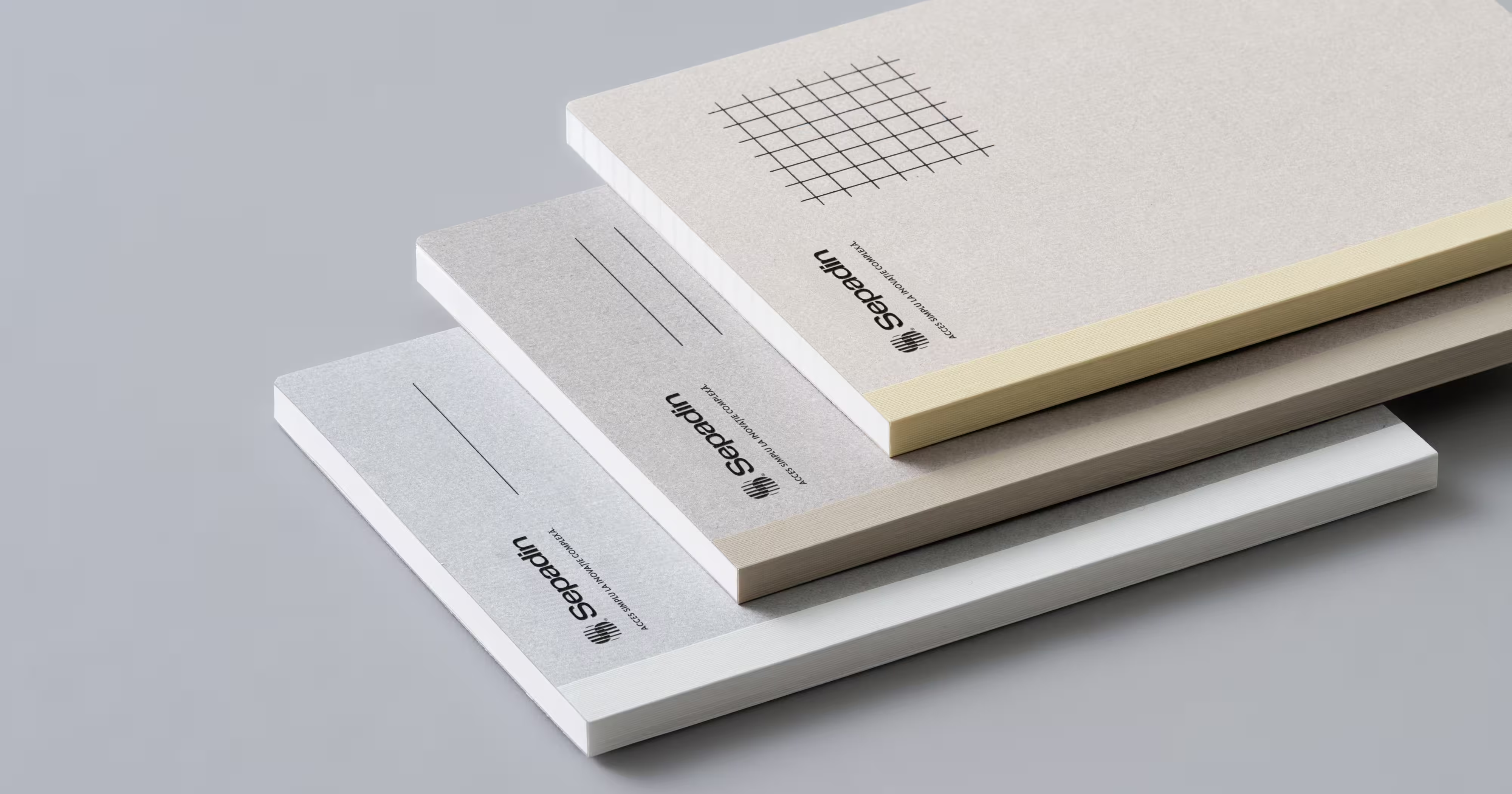
Visual scalability is the capacity of an identity system to expand, multiply and adapt without losing integrity or requiring constant creative director intervention. It is not decoration, it is infrastructure.
A brand that scales isn't simply one with a nice logo that works at small sizes. It is a system of rules and components that allows the creation of new touchpoints, sub-brands, products, campaigns, markets, with minimum cognitive load for the team and maximum coherence for the audience.
The colour system: far more than aesthetics
A well-constructed colour palette is a decision architecture, not an aesthetic preference.
Cross-media consistency
A brand colour exists in at least four formats simultaneously: RGB (screens), CMYK (print), Pantone (packaging) and HEX (digital). A colour system that is not calibrated across all four produces visible deviations that erode confidence in the brand's precision.
Accessibility and data communication 1
The WCAG 2.1 standard requires a minimum contrast of 4.5:1 for body text and 3:1 for large elements. In sectors with mixed or ageing audiences, this is not optional, it is a business risk. A colour system designed for accessibility is automatically more legible, more persuasive and more professional across all contexts.
Typography as interface, not decoration
Typography accounts for 60–70% of any screen or print surface. Which means it is the primary design variable, not an afterthought to the logo or colour palette.
Performance
A scalable brand uses variable fonts or carefully selected Google Fonts that maintain identical visual rendering across OS, browser and device. Font fragmentation creates inconsistency, which reads as brand fragmentation.
Sustainability
A functional type system defines at most 3 levels of hierarchy: display (H1), body (paragraphs), utility (labels/CTA). Adding more creates visual noise, and forces every new designer on the team to make subjective decisions instead of following a system.
'Typography is the craft of endowing human language with a durable visual form.'
Robert Bringhurst, The Elements of Typographic Style
Logical patterns: the hidden backbone
Grid, spacing, proportions, these are the elements that allow two different designers, working on different continents, to produce materials that look as though they came from the same hand.
An 8px base grid, a modular spacing system and a predefined set of component templates reduce design time by 30–40% while simultaneously improving quality consistency.
Real-world applications of visual scalability
Digital-first brands
For a SaaS or e-commerce brand, the design system (Figma components, tokens, auto-layout) is the brand. Every new screen must look like the rest of the product, without a creative director reviewing every card, button or modal.
Cost efficiency
Companies with robust design systems reduce the time spent on design and development iterations by 30–50%. That is not a creative metric, it is a financial one. In a scale-up with 5 product squads, this difference can represent hundreds of thousands of euros per year.
Read more
What Is a Brand & Product Designer, and What Do They Actually Do?
Anatomy of a Technical Rebrand: When and Why to Change Visual Direction
What Makes a Layout Look Professional Before You Even Read It
European Accessibility Act: What It Means for Your Website
Extensibility: the acid test
The real test of a brand system's scalability is: can it absorb a merger, acquisition or radical product pivot without looking like it was stitched together overnight?
M&A and sub-branding
A modular brand architecture, with clearly defined primary and secondary tokens, allows the rapid integration of new entities while maintaining the parent brand's authority and coherence.
Architecture as a performance lever
In B2B markets, brand architecture directly affects conversion. A potential enterprise client who encounters inconsistency between the website, the sales deck and the product interface will question the company's operational rigour. Design coherence is not just aesthetics, it is a signal of internal processes and team alignment.
A brand that scales is not built once and forgotten. It is a living system, reviewed quarterly, updated with each major product initiative, and documented in a way that new team members can understand in under two hours.
Sources
1 ResearchGate, Color Psychology and Consumer Behavior, 2022. Colour choices directly influence brand recognition by up to 80% and purchase intent by 21%.

Alina Lenghel, Managing Director @ Sepadin
"He is extremely professional, immediately understood who we are and what we were looking for, and that is clearly reflected in all the materials he subsequently created for us: logo, website, digital materials, print and more."

