Design
Feb 18, 2026
What Is a Brand & Product Designer, and What Do They Actually Do?
Definition, role, and context.
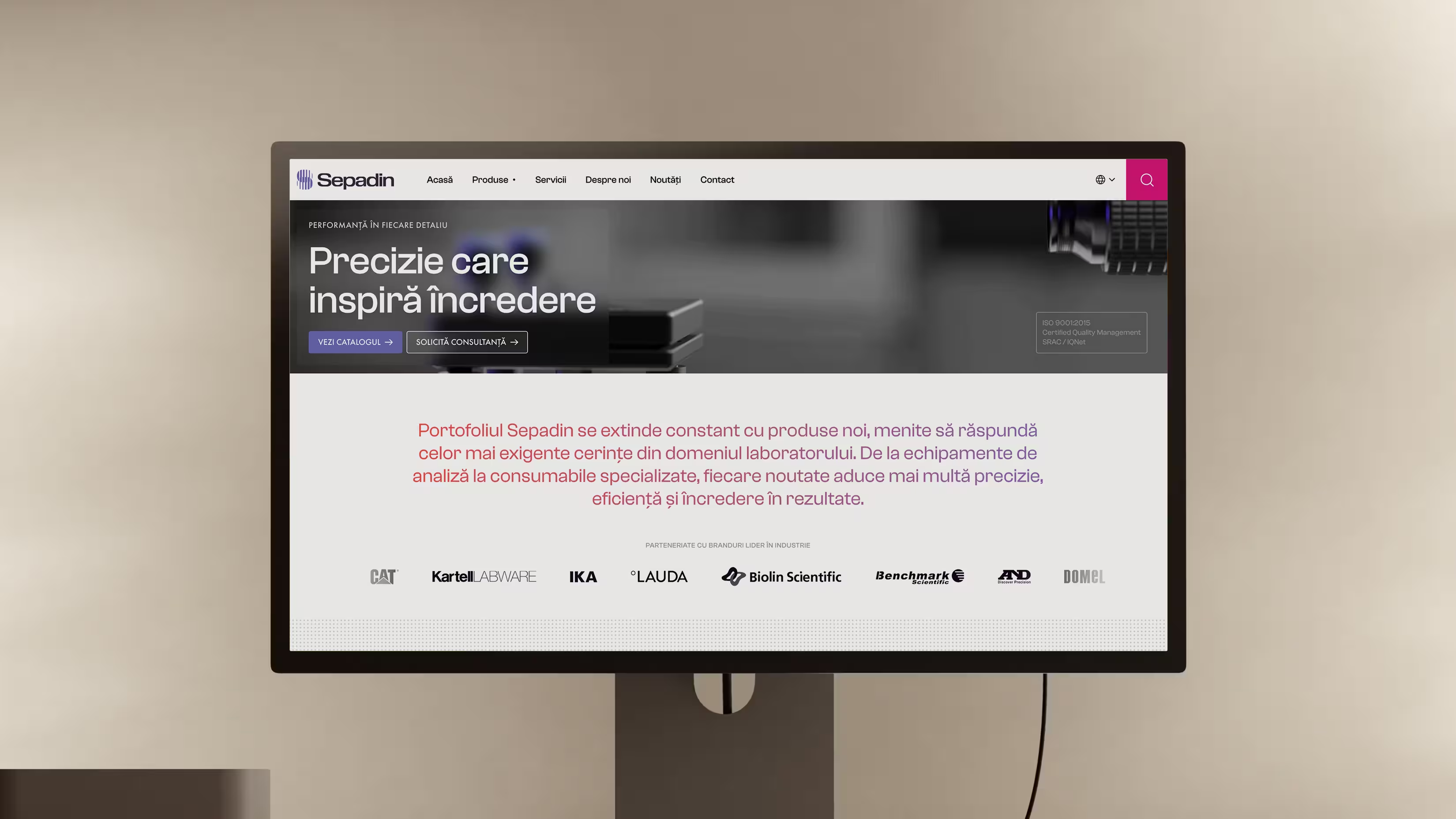
A brand & product designer is the creative professional who translates ideas, values and strategy into coherent visual form: identity, interfaces, systems and experiences.
The term has evolved significantly from the earlier label "visual designer", which in the European market reads as purely executional, focused on aesthetics over outcomes. A brand & product designer operates at the intersection of strategy and execution, working on both the identity layer (brand) and the product experience layer (product).
More than making things look good
The role encompasses a range of interconnected activities that affect business outcomes directly:
Visual identity: Logo, colour system, typography, iconography, motion, the foundation that makes a brand recognisable and authoritative.
Product design: Interfaces, flows, information architecture, the layer users interact with daily. Clarity here directly drives retention and conversion.
Design systems: Modular libraries of components, tokens and rules that allow teams to build consistently at scale.
Strategic communication: Pitch decks, sales materials, investor presentations, translating complex ideas into clear, compelling visual narratives.
Industries, in practice
My project distribution reflects a clear specialization in technical and academic fields. These environments demand high-system clarity, where the primary role of design is to structure complexity, explain the intricate, and remain completely coherent as the organization scales.
Health & Science
9
eCommerce
6
Industry / Energy / Infrastructure
5
Tech & Software
4
Food / Hospitality / Lifestyle
4
Professional Services
3
Culture / Events / Experiences
3
Fashion / Beauty / Craft
2
Real Estate
1
Why it matters: the numbers
32%
higher total returns for design-led companies vs. industry peers, over a 5-year period, McKinsey Design Index 1
400%
improvement in conversion rates linked to superior UX investment, Forrester Research 2
59%
of customers will walk away after a bad experience, even if they love the company or product, PwC Future of CX 3
These numbers reflect something simple: design is not the packaging of a business idea, it is a core mechanism through which a business builds trust, reduces friction and retains customers.
Read more
What Is a Scalable Brand: Visual Architecture as a Strategic Asset
Anatomy of a Technical Rebrand: When and Why to Change Visual Direction
What Makes a Layout Look Professional Before You Even Read It
European Accessibility Act: What It Means for Your Website
A necessary evolution
The shift from "visual designer" to "brand & product designer" is not semantic, it reflects a genuine expansion of scope and accountability. Today, the best designers in the market work at the intersection of business strategy, user psychology and technical execution.
In a B2B context specifically, where procurement is rational, trust cycles are long, and design literacy in leadership teams is high, working with a brand & product designer means having someone who can own creative outcomes end-to-end: from brand positioning through to shipped product, with clear accountability at every stage.
Sources
1 McKinsey & Company, The Business Value of Design, 2018. Companies that invest strongly in design outperform industry benchmarks by 32% in revenue and 56% in shareholder returns.
2 Forrester Research, The Business Impact of Investment in Experience. UX investment can yield up to 400% ROI through conversion and retention gains.
3 PwC, Future of Customer Experience Survey, 2018. 59% of consumers will leave a brand they love after several bad experiences.

Alina Lenghel, Managing Director @ Sepadin
"He is extremely professional, immediately understood who we are and what we were looking for, and that is clearly reflected in all the materials he subsequently created for us: logo, website, digital materials, print and more."

